

The Airbnb That Looked So Good in the Photos
What a scam in Cebu City taught me about who pays when no one does the work.

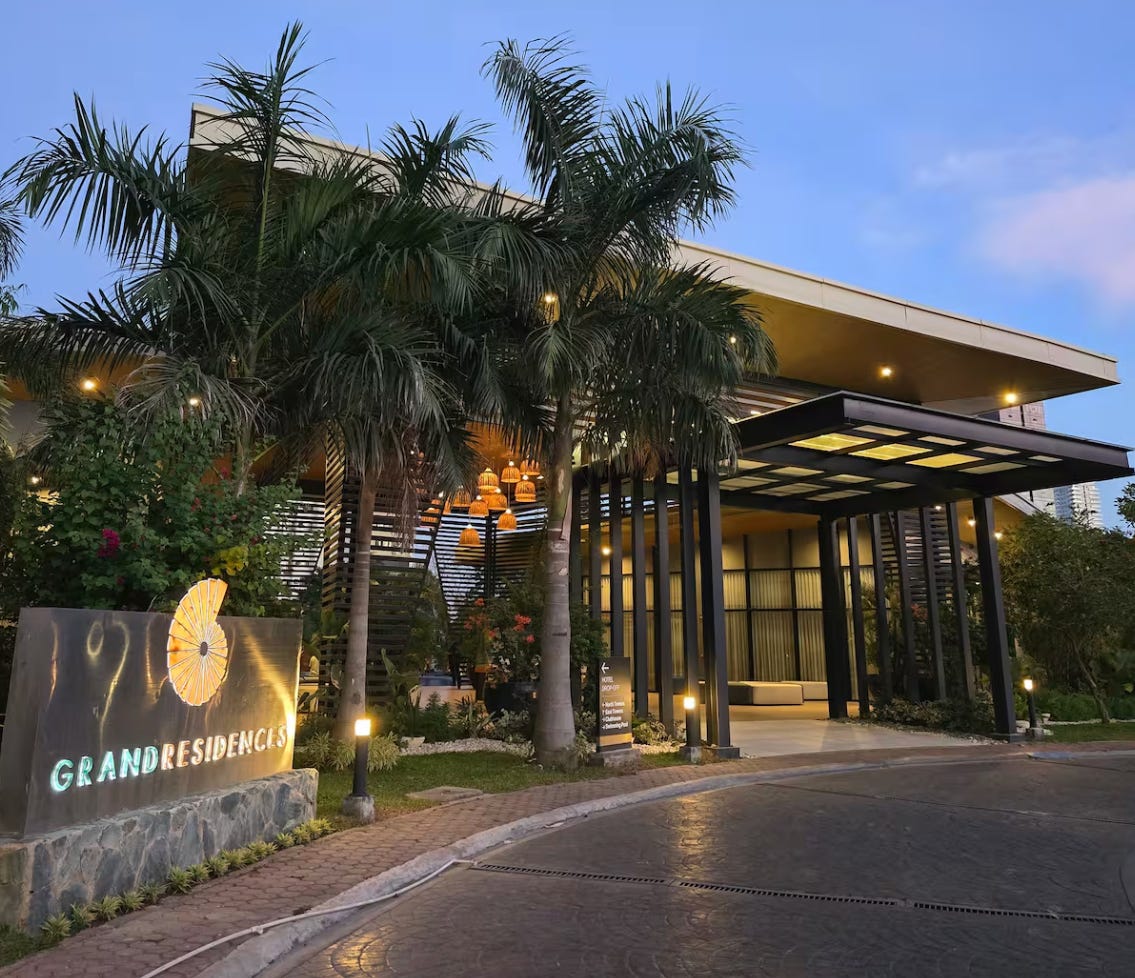
I spent two days trapped in an apartment in Cebu City that smelled faintly of rotting fruit and someone else’s bad decisions.
Ants moved across the floor in a clean line toward a takeout container the previous guest had left on the balcony. The balcony chair was broken. I learned that by nearly falling off it. The bathroom had no shower curtain, so every time I turned the water on, the floor flooded. In the lobby, signs asked residents to stop throwing trash and cigarettes off their balconies because other residents were complaining.
This was not the apartment I had paid for.
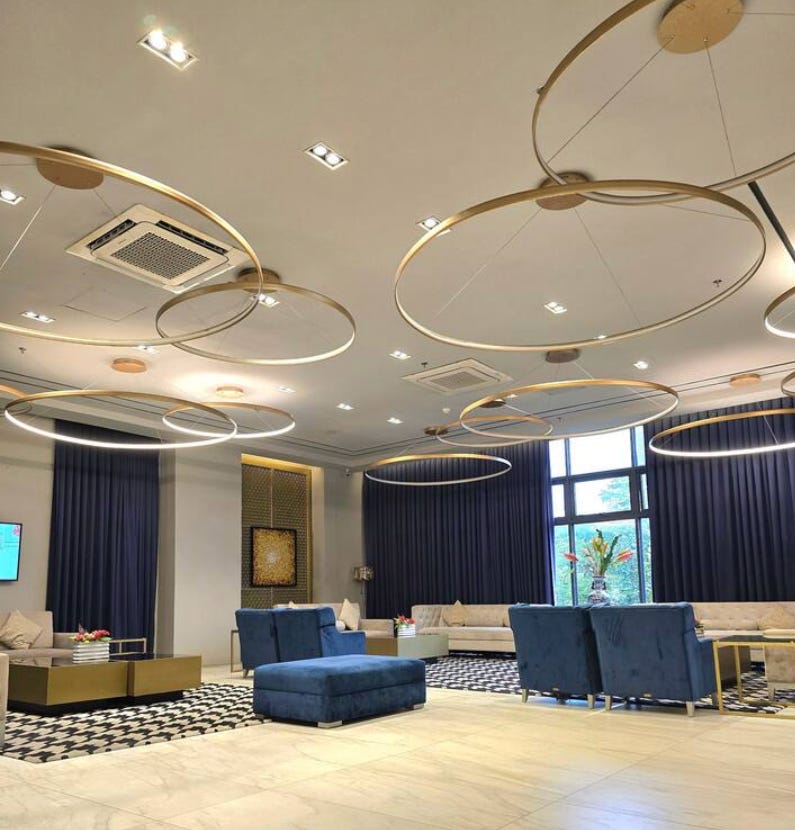
Or rather: it was exactly the apartment I had paid for, because the apartment I had paid for did not exist. What existed were photographs. A lobby shot taken at the perfect angle, lit like a hotel commercial. Wide, clean, and full of promise. What existed were reassuring messages from the hosts, who answered my questions so politely before booking that I thought I was making a smart decision. What existed was Airbnb’s larger promise that you could belong anywhere, that travel had been democratized, that the world was now yours to access on your terms.
What I got was a lie held together by a cancellation policy designed to trap me the moment I discovered the truth.
I had used Airbnb across Southeast Asia for months in Bangkok, Ho Chi Minh City, Hanoi, Da Nang, Hoi An, and Bali. Every booking had delivered what the photos promised, sometimes better. I knew what to look for. I knew what to ask. I knew what kinds of listings to avoid.
That trust is what made Cebu so disorienting. I did my due diligence. I still got scammed.
The lie is that ownership of property, access, and other people’s need for shelter is a path to freedom. That if you can position yourself between someone else’s labor and someone else’s need, you can extract value without producing anything. That this is not only acceptable but admirable. That this is wealth.
The hosts who owned my apartment in Cebu—Steve and Jane—were based in the same city. They were a few miles away. When I reported the problems, they offered to move me to a different unit and said they needed an hour to prepare it.
It wasn’t prepared.
The second unit had its own problems: more insects, more grime, a bathroom that looked like it had not been cleaned in weeks. When I asked them to honor the original two-week booking and refund the rest, they refused. They said they were following Airbnb policy.
And they were.
What made it worse was that they were not even doing the work themselves. They kept saying they could send the cleaner or the maintenance guy. Which meant the cleaner they hired had not removed the rotting food, scrubbed the grime, or checked for ants. Steve and Jane extracted rent without being present. Their cleaner got paid without actually cleaning.
Here’s how the trap works.
When you book a long-term stay on Airbnb — anything over 28 days — the cancellation policy is built to lock you in before you can discover what is wrong. For my booking, Airbnb’s standard Firm Long-Term policy meant that if I canceled thirty or more days before check-in, I would get a full refund. If I canceled with less than thirty days’ notice, the first month became nonrefundable. Once I checked in, I would need to give thirty days’ notice to shorten the stay. In practice, that meant I would still be paying for another month even if I wanted to leave immediately.
By the time I arrived and found the ants, the broken furniture, the grime, and the general decay, it was already too late. I was locked into paying for weeks of accommodation I would never have accepted had I known the truth.
The policy ensures that by the time you open the door and see reality, the money is already theirs. It is not a neutral framework. It is a mechanism that makes misrepresentation survivable for the host.
Steve and Jane matter here less as individuals than as examples of what Airbnb trains people to become.
They are not cartoon villains. They are true believers. They have absorbed what Airbnb has spent years teaching people to accept as normal: that property ownership is a passive income stream, that you can make money while you sleep, that you do not need to be present, attentive, or even especially competent as long as you control access to an asset someone else needs. They do not think they are running a scam. They think they are running a business.
But the work still has to get done somewhere. And when the hosts outsource it, the burden shifts again — to customer support, to contractors, and finally to the guest.
Except Airbnb’s customer support does not really do that work either.
I was passed among at least 18 different agents. None of them appeared to have read the previous messages. All of them repeated some version of the same script: they understood my frustration, but the cancellation policy was clear.
I kept sending documentation. Photos of the ants. Videos of the building. Screenshots of the hosts’ own messages acknowledging the problems. Each time, a new agent. Each time, the same answer.
Then I received this: “The documentation you have provided is unfortunately not sufficient for us to offer a full refund for this reservation.”
That was the point when the actual shape of the system became obvious.
The work goes to you. The guest. You become your own lawyer, documentarian, researcher, and advocate. You gather evidence, build a record, and keep escalating into a structure designed to wear you down. You become the person responsible for forcing accountability out of a platform that has made accountability everyone else’s problem.
That is the real cost of passive income. Not simply that no one does the work. It is that when the system fails, the only person left holding the bag is the one who never extracted a dime from it.
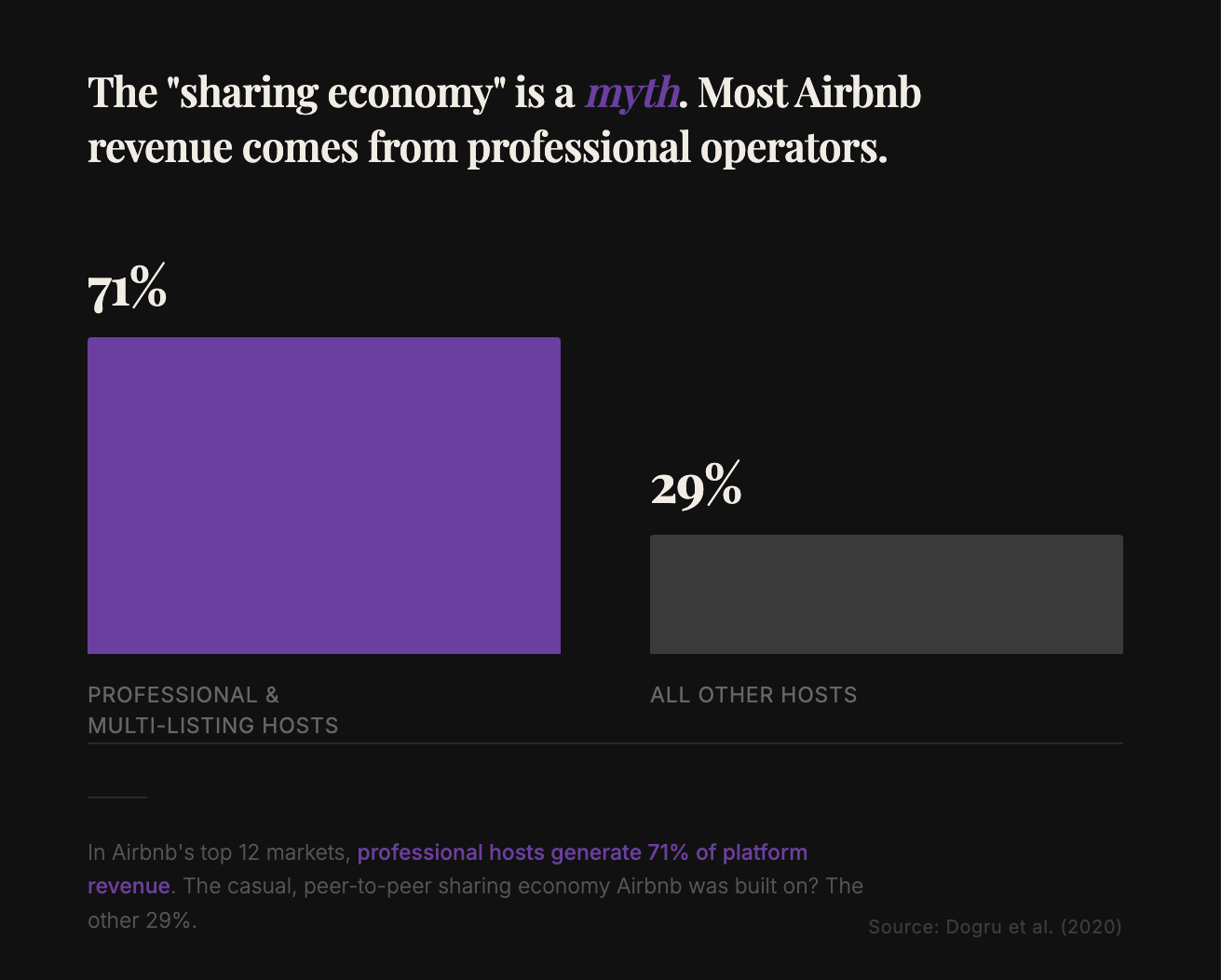
Airbnb’s origin story is now familiar. Two broke men in San Francisco rented out air mattresses during a design conference in 2007 and built a company on the idea that strangers could trust each other enough to share space.
That story is still on the website. It is still in the marketing. It is still what many of us believe, at least partly, when we book.
But the company that story describes does not exist anymore, if it ever did.
What exists now is a global platform with the reach of a hotel chain and the accountability of nobody. It is not treated as a landlord, so it has no obligation to maintain conditions. It is not treated as a hotelier, so it avoids many of the regulations that govern hospitality. It sits between categories and answers fully to neither. The hosts are independent. The platform is neutral. And when something goes wrong, the guest discovers that no one in the arrangement is actually responsible for anything.
And still, people keep using it. I keep using it. Not because it is trustworthy, but because for longer stays in parts of Southeast Asia, the alternatives are often either more expensive or less flexible. Airbnb built a market around that gap and made itself feel inevitable.
The promise was that you could have the intimacy of someone’s home without the impersonality of a hotel. What you often get instead is a cancellation policy that protects one side and a review system that asks you to trust a consensus that may not mean much at all.
I contacted Airbnb’s press office with three questions: how the company prevents cancellation policies from being used to protect fraudulent listings, what recourse guests have when listings are materially misrepresented after the refund window has closed, and whether it would intervene in my case given the documented evidence. I followed up with a question about the review process. As of publication, Airbnb had not responded.
I also filed complaints with the Philippine Department of Trade and Industry for fraudulent business practices and with the Department of Tourism for accommodation standards violations. I sent a demand letter through Airbnb’s own support system outlining what I believed were clear consumer-protection and breach-of-contract issues.
Eventually, Airbnb relented and gave me a full refund.
I won, but only because I had unusual advantages. I am a journalist. I know how to document. I know how to escalate. I know how to find the right email addresses and how to keep pressing when a system assumes most people will stop.
Most people probably do stop. Or cannot afford not to.
That matters more than my refund does.
Because even after the refund, the structure remained intact. The listing stayed up. The burden remained where it had always been: on the guest who notices the lie and then has to prove, repeatedly, that it is a lie.
Airbnb did not invent extraction. It inherited it from a much older tradition of landlordism that treats housing as an investment vehicle instead of a human need, and treats maintenance and care as costs to be minimized rather than obligations to be met.
And we accepted it. Not because it worked especially well, but because it felt inevitable. Because we inherited a faith that markets correct themselves, that reviews equal accountability and that access equals fairness. We rarely stop to ask who taught us that, or who benefits from our continuing to believe it.
The reviews that helped me decide became harder to trust once I understood what five stars actually measure. It doesn’t distinguish between a weekend guest who used the apartment as a place to sleep between bars and a two-week guest who opened every cabinet and found what was living inside. It doesn’t distinguish between a smooth check-in and working plumbing. It doesn’t account for the guest who noticed problems but didn’t want the confrontation of saying so. Forty-four people did not necessarily have the same stay. They answered from different thresholds, different lengths of stay, and different levels of scrutiny, and the platform compressed all of that into one reassuring number.
And now we’re all standing in the apartment we paid for: the one with the ants, the broken furniture, and the lobby signs begging people to stop throwing trash off their balconies. ⁂

