

Colonial Echoes at the Checkout Counter
What everyday transactions reveal about race, power, and who gets forgiven.

It’s interesting being a Black American in Vietnam for the first time and walking around a country that white people have attacked more than once, colonized, bombed, rebuilt, and now photographed as a backdrop for travel influencers.
What’s wild is watching how some of that history plays out at checkout counters. A few times now, I’ve noticed Vietnamese women working in stores or cafés beam at white foreigners — wide, warm smiles, voices soft and melodic — then, when it’s my turn, their faces go blank. No eye contact. Just a transaction.
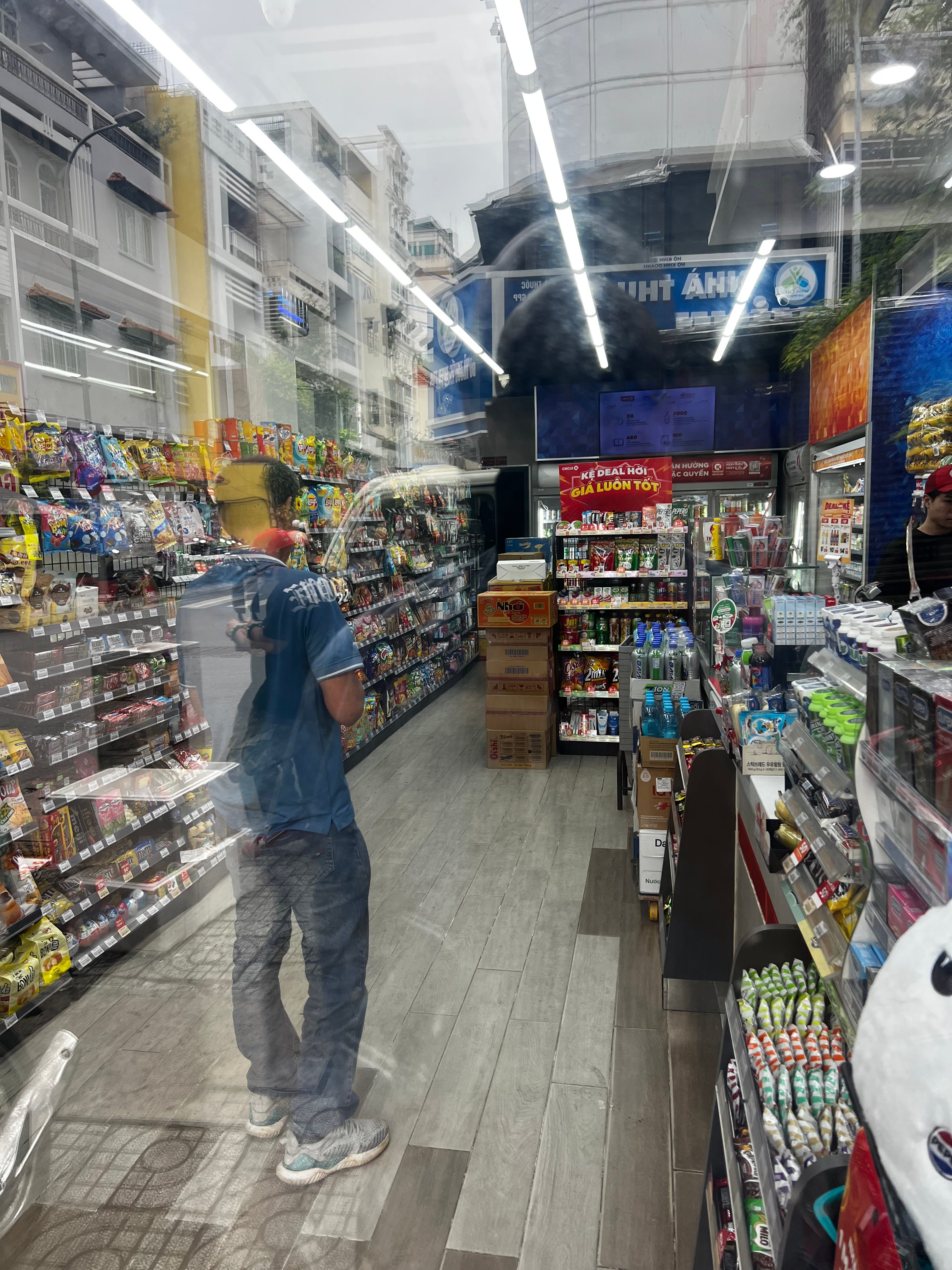
My first reaction isn’t anger. It’s confusion. Like, Chile…why are you smiling at them like that? You know what they did here, right?
That’s the knee-jerk part of me. The one raised in the United States, reading history books written in English, taught to spot race in every micro-gesture. The part that knows France colonized this country in the late 1800s, that the U.S. dropped more bombs on Vietnam than all of World War II combined, that people alive today remember hiding in tunnels while their villages burned.
But then I check myself. Because I know what I’m seeing isn’t just about me. Or even them.
Those smiles might be performances learned for survival. Tourism has become one of Vietnam’s major economic sectors, and the global order still rewards proximity to whiteness. White tourists often have more money to spend, better reviews to leave, and more influence on platforms that determine a business’s survival. So yes, it could be an economic calculation dressed as warmth.
Or maybe I’m projecting. Maybe I’m carrying so much American racial baggage that I’m reading hostile intent into neutral service. Maybe they smiled at the white customer because he ordered in Vietnamese and I didn’t. Maybe because he comes in every week and I don’t. Maybe because she was having a good moment that ended before I walked up.
The uncertainty itself says something. I can’t know. That’s the problem and the point.

Today in another convenience store, a woman and her two young kids were clearly talking about me while I was in line paying. I couldn’t understand what they were saying, but I watched them glance at me, speak in quick Vietnamese, glance again.
My first thought: They’re being unkind.
Then immediately: You have no idea what they said. It could have been “look at his shoes” or “that’s a nice tote bag” or nothing about you at all.
Then: Why do you assume the worst? What makes you go straight to threat?
That’s what this trip keeps surfacing. I’m watching myself interpret everything through layers of American racial anxiety, colonial history, and personal insecurity, and I can’t tell which layer is responding to what I’m actually seeing versus what I’m bringing to it.

Being a Black American abroad is its own complicated equation. I carry the passport of the same country that once dropped bombs here and yet I wear the skin that country has always devalued. So I move through the world both privileged and suspect, depending on who’s looking.
I’m not French. I’m not white. But I’m Western. I have dollars. I’m a tourist. I benefit from the same global hierarchies that make their smiles economically rational, even if I’m not the primary beneficiary.

If the United States had been blanket-bombed by a foreign power, would Americans smile warmly at those foreigners’ children fifty years later? Serve them coffee with extra care? Probably not. We’re still angry about things that happened centuries ago. We build our entire national identity around never forgetting slights.
So when I see warmth extended to white tourists here, part of me thinks: How? How do you smile at them after everything?
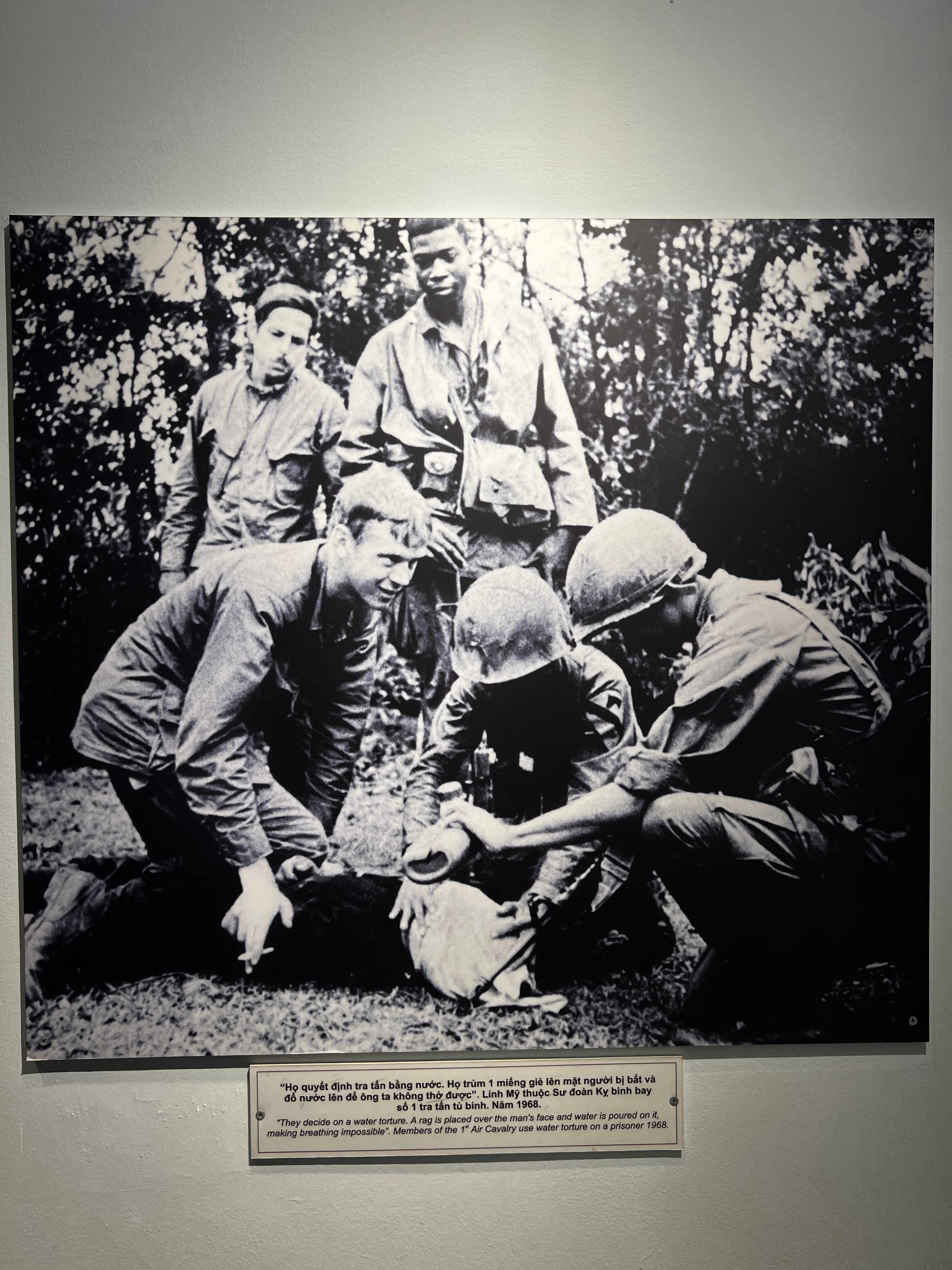
After visiting the War Remnants Museum, I learned that Saigon (where I’ve been having these interactions) was the capital of South Vietnam, the US-backed side. The city that American soldiers once occupied and defended. The place that became Ho Chi Minh City only after the North won in 1975. So when I wonder how Vietnamese people can smile at white tourists after everything, I’m really asking: how do you serve coffee to people who look like your former occupiers in a city that was once their headquarters?
But maybe that question reveals more about American culture than the resilience of the Vietnamese. Maybe holding onto grievance is its own kind of privilege. Maybe survival looks like strategic warmth. Maybe I don’t understand forgiveness because I’ve never had to practice it at that scale.
Or maybe I’m romanticizing pragmatism as grace. Maybe they’re not forgiving anything and just doing what gets them through the day in an economy built on foreign tourism.


History doesn’t erase itself. It adapts. It hides in politeness. It lives in who we think deserves warmth and who we withhold it from.
But if I’m honest, part of what I was reacting to in that store wasn’t just the lack of her smile. It was the way I saw myself reflected in her blank expression — neither white enough for automatic warmth nor local enough to be seen as anything but foreign.
Just another American. With all that implies.
I’m still figuring out what I’m experiencing here. But I know this much. Every interaction is a translation I’m probably getting wrong. Every assumption reveals more about me than the person I’m watching.
And maybe that’s the real colonial echo. Not just what was done here, but how thoroughly it trained all of us, in different ways, to read power into every gesture. ⁂

