His Face on Your Passport
Trump is redesigning your passport, the Supreme Court just killed the Voting Rights Act, and the Michael Jackson biopic exposes a racial double standard in film criticism.


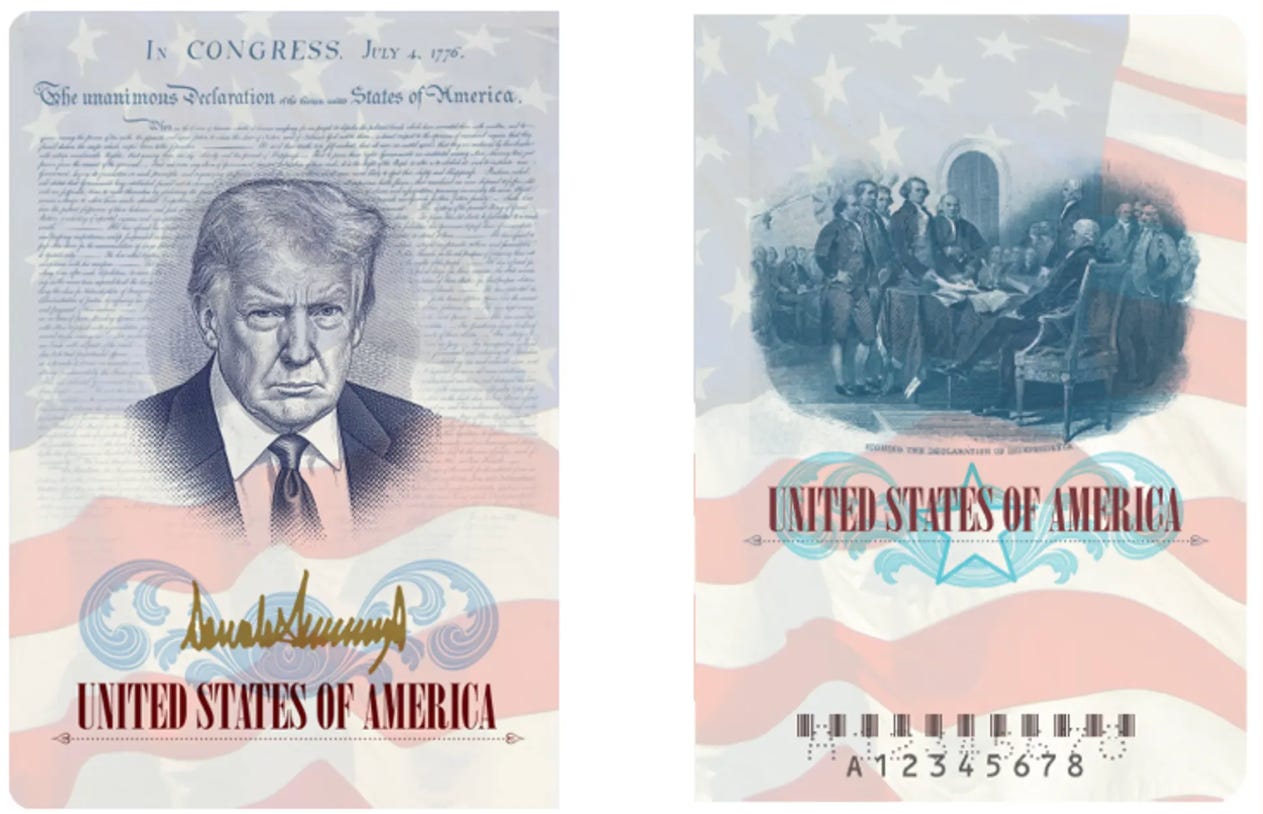
State Dept. Finalizing Plan to Put Trump Picture on U.S. Passports
I travel frequently. My passport is one of the few government documents I actually hold in my hands on a regular basis. And now the State Department is finalizing a redesign that features Trump’s inaugural portrait over the text of the Declaration of Independence, with his signature in gold below it.
This has never happened before. According to a Georgetown professor of passport history interviewed in the piece, no sitting president has ever appeared on an American passport, and no country in the world puts its current head of state on the document. He called the decision “wacky,” which is generous. The passport I carry right now has the closing lines of “The Star-Spangled Banner” and a quote from the 19th-century author and activist Anna Julia Cooper about freedom belonging to all of humankind. That’s what’s being replaced.
The State Department says it’s a “limited run” of 25,000 for the 250th anniversary of American independence. Snopes confirmed the redesign is real. My passport doesn’t expire for a few more years, but I’m already thinking about renewing it early so I don’t end up with this one. A passport is supposed to say where you’re from. This one says who you belong to.

Supreme Court Deals a Death Blow to the Voting Rights Act
Ari Berman, Mother Jones
The Supreme Court’s six-to-three conservative majority just did what Chief Justice John Roberts has been working toward for over 40 years. In Louisiana v. Callais, Justice Alito’s majority opinion strikes down the creation of a second majority-Black congressional district in Louisiana and narrows Section 2 of the Voting Rights Act to the point where it’s nearly impossible to prove that a gerrymandered map violates the rights of voters of color.
Justice Kagan dissented: “I dissent because the Court betrays its duty to faithfully implement the great statute Congress wrote.”
The estimates are staggering. Up to 30% of the Congressional Black Caucus could lose their seats. Nearly 200 state legislative seats held by Democrats in the South could be eliminated. States like Tennessee, Alabama, Mississippi, and Louisiana could end up with no Black representatives at all, which is what happened after Reconstruction was violently overthrown and white supremacy was locked in for decades.
Nikole Hannah-Jones wrote that this ruling will likely lead to a “disappearance of much of the Black congressional representation.” She added, “There are people still living who fought — and watched their compatriots be murdered — for the passage of this act and to attempt to democratize America. To see it completely felled in the span of their own lifetime is just absolutely devastating.”
The Voting Rights Act of 1965 made America a multiracial democracy. This ruling unmakes it. And the hypocrisy is worth naming. In December, the Court allowed Texas to redraw maps that deliberately disempowered voters of color. In April, it blocked Louisiana from drawing maps that would represent them. One set of rules for maps that benefit white voters. Another set for maps that don’t.

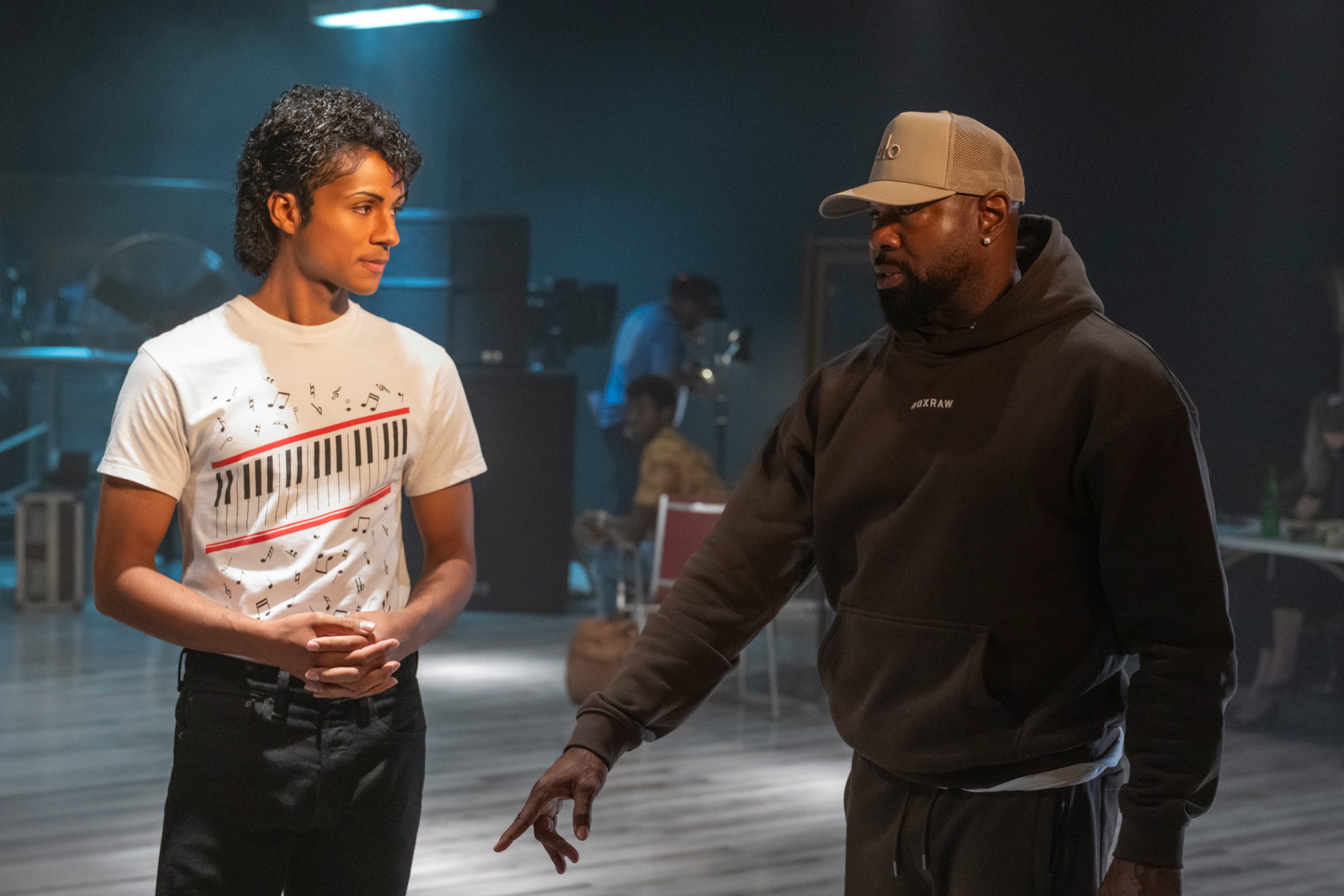
The Devil Wears Prada 2
20th Century Studios
I loved the first one. I’m going to see the second one. But the marketing has been making me uneasy.
When the first film was being made, designers wouldn’t lend clothes for the production because they were terrified of Anna Wintour. The real Anna Wintour. The woman the film was satirizing had so much power that the industry was afraid to be associated with a movie that made fun of her. In hindsight, the movie became beloved. Wintour eventually embraced it.
Now the sequel is a different universe. The costume designer said in an interview that designers were offering clothes this time around, trying to get into the film. Anna Wintour is on the cover of Vogue alongside Meryl Streep to promote it, which is her first time on the cover in over 30 years. Beauty brands are running ad campaigns tied to the release. The institution that was once so feared nobody wanted to touch the satire is now co-signing the marketing.
I’ll have to see it before I make a final judgment. But there’s something strange about a satire being cannibalized by the thing it was satirizing.

Why You Should Not Listen to the Critics of Michael
Lawrence Ware, The Root
The Michael Jackson biopic opened to $217 million worldwide. Critics gave it a 33% on Rotten Tomatoes. Audiences gave it a 97%.
Critics say the film is sanitized because it ends before the allegations arose. What they don’t mention is that scenes addressing the 1993 accusations were originally in the film and had to be cut because of a legal clause in the settlement that bars any depiction of the accuser. The director didn’t choose to leave it out. He was legally required to. And yet the reviews treat the omission as a moral failure rather than a legal constraint.
Lawrence Ware at The Root made the argument I’ve been thinking about. When the subject is a Black artist, the expectation is confession, condemnation, and closure, all at once. Elvis glossed over the fact that Presley began courting Priscilla when she was 14. Rocketman smoothed over Elton John’s rougher edges. Bohemian Rhapsody barely engaged with Freddie Mercury’s more complicated personal life. All three were allowed to celebrate the music. Michael Jackson was tried on 14 counts in 2005 and acquitted on every single one. He is dead and cannot defend himself. Accusers recanted. I wonder if the critics who are most committed to holding this film accountable brought the same energy to Amazon’s Melania documentary. The selective outrage tells you something about whose legacy gets the benefit of complexity and whose gets treated as a case to be tried.
K. Austin Collins made a related argument in The Atlantic this month. Black comedy’s revolutionary potential is strongest when it ignores the white gaze — when it’s measured by its relationship to the community it came from, not by white institutional acceptance. The same logic applies here. The audiences dancing in their seats at the Michael Jackson biopic aren’t confused. They know what they inherited from that music and they showed up to celebrate it.

Asian Mothers, Bad Feelings: Notes on an All-Conquering Stereotype
Rebecca Liu, The Guardian
Rebecca Liu traces the “difficult Asian mother” through decades of diasporic literature and film, from The Joy Luck Club to Crazy Rich Asians to Turning Red, and argues that this character is less a stereotype than a vessel. These mothers are carrying the suppressed trauma of a generation of women shaped by war, poverty, and patriarchy. They channel their unprocessed anger about lost opportunities onto their children. And if they succeed in raising children who are comfortable in their new country, their prize is a child who is unintelligible to them.
Liu interviewed friends from her Hong Kong school and her own mother, who revealed that Liu’s grandfather was publicly denounced during the Cultural Revolution. Her generation now navigates these relationships through therapy and distance, vowing to break the cycle while fearing their own children will write the same books about them. The inheritance moves in one direction. The trauma gets passed down, the context gets lost, and every generation believes they’ll be the one to stop it.

If We’re So Sad, Why Are We Still Spending?
Hanna Horvath, Your Brain on Money
Consumer sentiment just hit the lowest reading in the University of Michigan survey’s 74-year history. Lower than 2008. Lower than the stagflation of the 1970s. But people are still spending. Horvath breaks down why through four patterns. Reality distortion, where your brain refuses to update what things should cost. Control displacement, where you over-control your morning routine because you can’t control rent or wages. Defensive positioning, where spending becomes a way to signal you’re still standing. And time horizon collapse, where the future stops feeling real and the present takes over.
Her conclusion argued the most contrarian financial position you can take in 2026 is hope. Not optimism. Hope as an act. Behaving as though the future is real even when everything around you is engineered to convince you it isn’t.
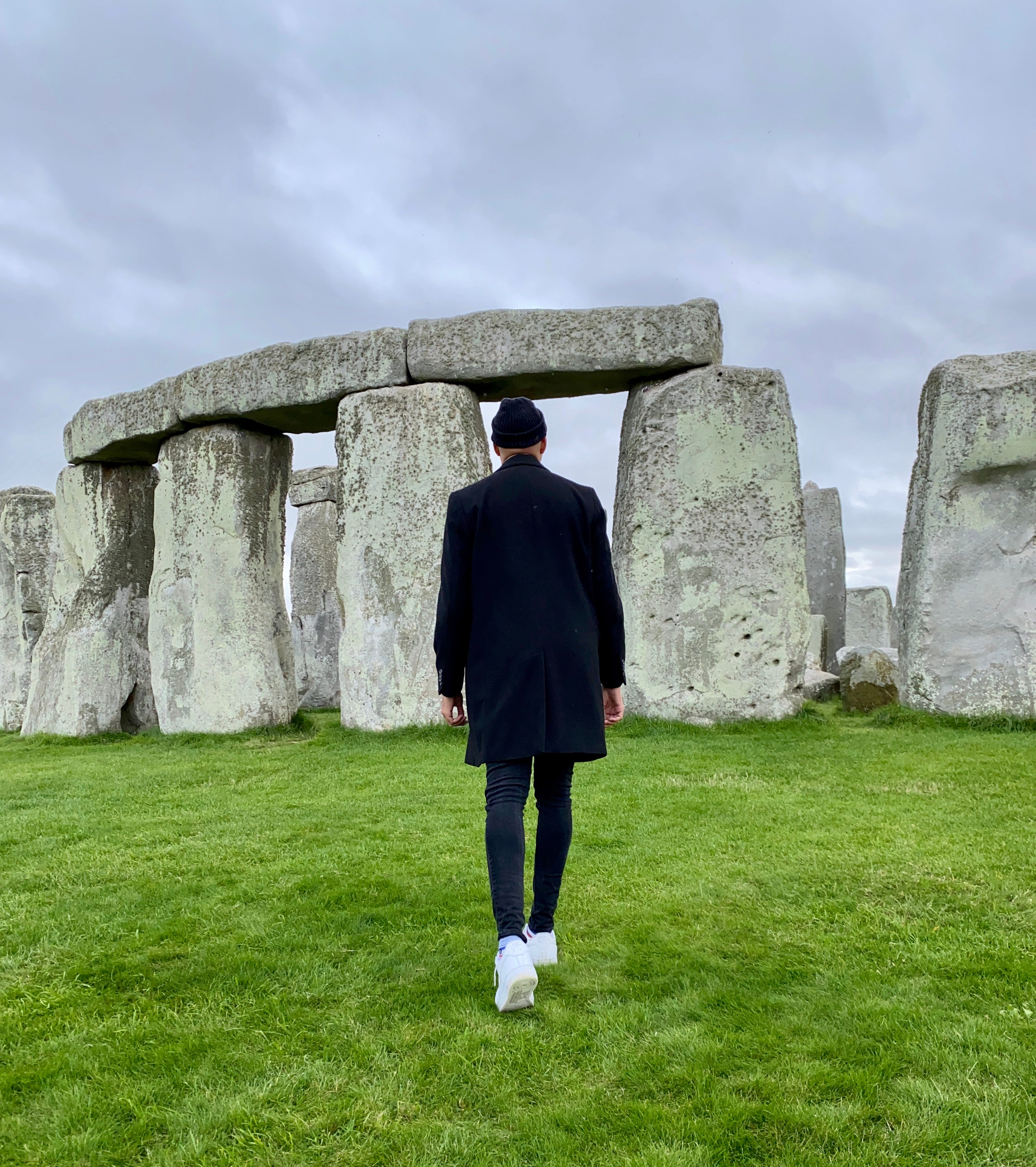
I’ve been thinking about this differently. I remember when 9/11 happened. The 2008 financial crisis. When I wanted to move to LA everyone said aren’t you afraid of earthquakes? During COVID I traveled anyway. I got to experience parts of the world during a moment most people stayed home. I got to see Stonehenge with almost no one else there. Now with the fuel crisis and the war it’s the same chorus: it’s too much going on, now is not the time to travel, I’m too scared.
There is always something going on in the world. And the comments I see online, people asking strangers how to live their life, whether it’s safe to go anywhere, whether now is the right time, it makes me realize how many people live in inherited fear. Fear passed down from parents who discouraged risk. Fear absorbed from news cycles designed to keep you watching. Fear that becomes the reason you never do the thing you said you wanted to do.
Horvath calls hope the contrarian position. I’d call it simpler than that. Stop being afraid to live your life. Go live it.

The Disappearance of the Public Bench
Gabrielle Bruney, Places Journal
In Paris there are benches everywhere. Along the streets, in the parks, at transit stops. People are using them for everything — reading, talking, eating, sitting with their kids, doing nothing. On one bench you might see someone sleeping. On the next bench over, a family laughing. Nobody is in an uproar about it.
Bruney’s essay is about what’s happening in American cities, where hundreds of public benches have disappeared over the past decade. Removed from subway stations, parks, bus stops, plazas. Some replaced with leaning rails designed to make sitting impossible. Some just gone. The justification is usually about “undesirable” use, meaning unhoused people sleeping on them. I reported on homelessness for years. I’ve seen the armrests bolted to the middle of benches to prevent anyone from lying down. I’ve seen bus stops where the bench was removed entirely so you stand in the sun waiting for a bus that’s already late.
Bruney writes that a bench removed is one less opportunity to interact with another person. What I see in Paris is what it looks like when a city decides that rest is a public right, not a privilege you earn by having somewhere else to go.