

Women Can’t Tell I’m Gay
Gaydar was supposed to be a survival skill. Almost nobody has it, and the women told to develop it paid the highest price.

The woman doing my hands chips away at my cuticles, says something in Vietnamese to the woman at my feet, and they both laugh. Then she tells me, in English, that I am very handsome, and asks whether I would like a wife.
I tell her I am not looking. I say it would be hard to travel the way I travel with someone waiting at home. That part is true. The rest of the truth is that I am gay, and I do not say it.
She asks my age. I tell her I will be 44 next month. Both women gasp. The one at my feet says I do not look it, not at all, and calls it across the shop. The others glance up from their clients to look and agree. For a minute, I am the catch of the afternoon. A handsome man with nice hands and no wife. A problem they could fix.

Here is what I have always believed about myself. I can tell. Drop me in any room and I will find the gay men in it before they find each other. A posture, a pause, the half second a man’s eyes rest on another man. I have done it so long it stopped feeling like a skill.
For most of my life I believed that women could read me on sight. And if one could not, I figured my voice would give me away the second I spoke. Somewhere in my 40s, I stopped being sure of either.
Here is how I read a woman, which is not what you would guess. It is rarely her body first. It is her wit. Her intellect. Her passion. Her charm. Every so often I notice her body the way you notice a sculpture. I’m looking at the proportions, the lines.
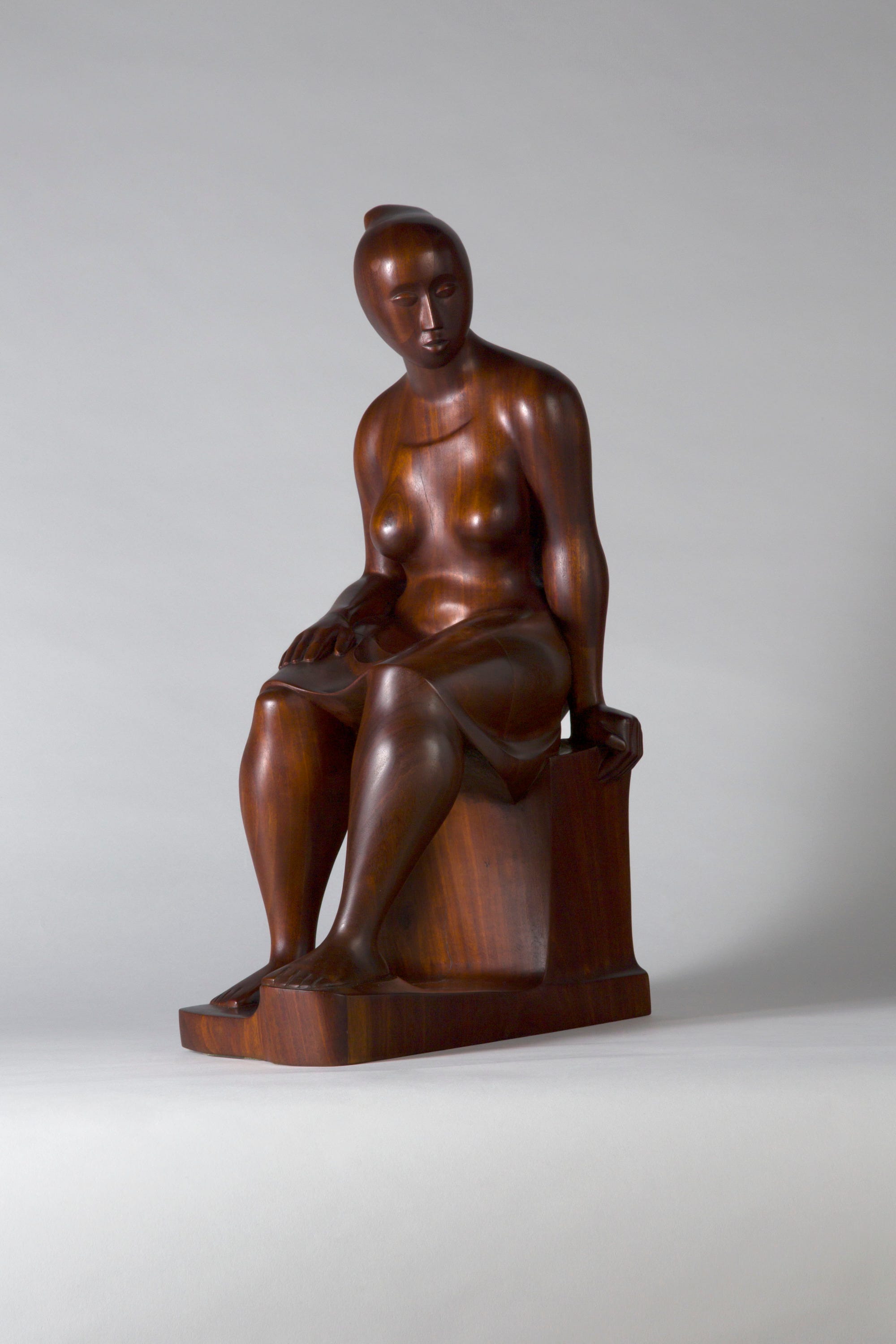
The sculptor I think of is Elizabeth Catlett, who worked the female form for a lifetime and said she was after Black beauty, not the European nudes she had been trained to copy. She looked at Black women’s bodies and saw something to honor, not to take. That is the look I am describing. I admire. I do not want.
I shouldn’t be surprised people can’t read me. In one experiment, college students saw faces flashed for a third of an eyeblink, grayscale, cropped so no hairstyle could help, and they still beat chance at sorting gay from straight. But women’s faces gave them 65% accuracy and men’s faces only 57, and the gap came down to one kind of mistake: they kept calling straight men gay. Men are the hard category. We are more guessed at than read. A room full of strangers will see gay men who are not there and miss the one sitting in the chair.
So the woman at the shop was not blind. There is a name for the assumption that everyone is straight until something in the room says otherwise. Call it the straight default. Most people reach for it first. She saw a man with decent skin and a passport’s worth of stories and reached for the most common answer, and the most common answer was a wife.
The reason I didn’t correct the woman at the shop is because, in part, I found it amusing. But it was also because it would have opened a door I did not feel like walking through that afternoon, which include the follow-up questions and the interview about whether my family knows. I was there to relax. I am not closeted and I am not ashamed. I let it go, the way you let a stranger keep a harmless wrong idea.
This happens in other scenarios too. If I walk past a man and his girlfriend and they both notice me, every now and then I’ll watch him pull her in closer while giving me a glare. For years I had no idea what that was. Now I know. His radar fails the same way everyone’s does. He has read me as straight and hungry, a rival sizing up the woman beside him. No one is looking at her. If I am looking at anyone, it is him. One study that measured straight men’s guessing found its sharpest readers among the homophobic ones who trusted their own eye. The men most certain they can spot us are the ones watching hardest, and even then, he got me wrong.

It was not always like this. There was a time nobody needed radar to find me. From 18 to 22 I made sure everyone knew. I wore loud clothes and did too much on purpose. I dyed my hair in different colors and wore different styles. When I walked into rooms, it was an announcement.
There are no photographs of any of it on my phone. Not one picture. Back then you still had to choose to document your life, with a disposable camera you meant to develop and never did. Somewhere there is probably a shoebox in someone else’s closet holding an outfit I would have denied a decade ago. Now I would just think, look at him. He came a long way. I can afford the tenderness because none of it ever touched the internet, where nothing is allowed to disappear. But I do not have the shoebox, and that is the part that stings. The years I was easiest to read are the years with nothing to show for it, and the years with a camera in my pocket are the years nobody can tell.
The gaydar I have came out of those years, and it did not come free. For a lot of gay men, especially older ones who grew up somewhere that made it dangerous, reading a room was a survival skill. You learned to find your people and steer around the ones who would hurt you for being findable. Straight people never had to build the tool. Why would they? One recent study put numbers on the difference. Asked to call strangers gay or straight from short clips, queer men were nearly twice as accurate as straight men, and more than 60% of the straight men got it badly wrong. But even the queer men were not especially good. They landed barely one read in four. We built the tool because we had to.
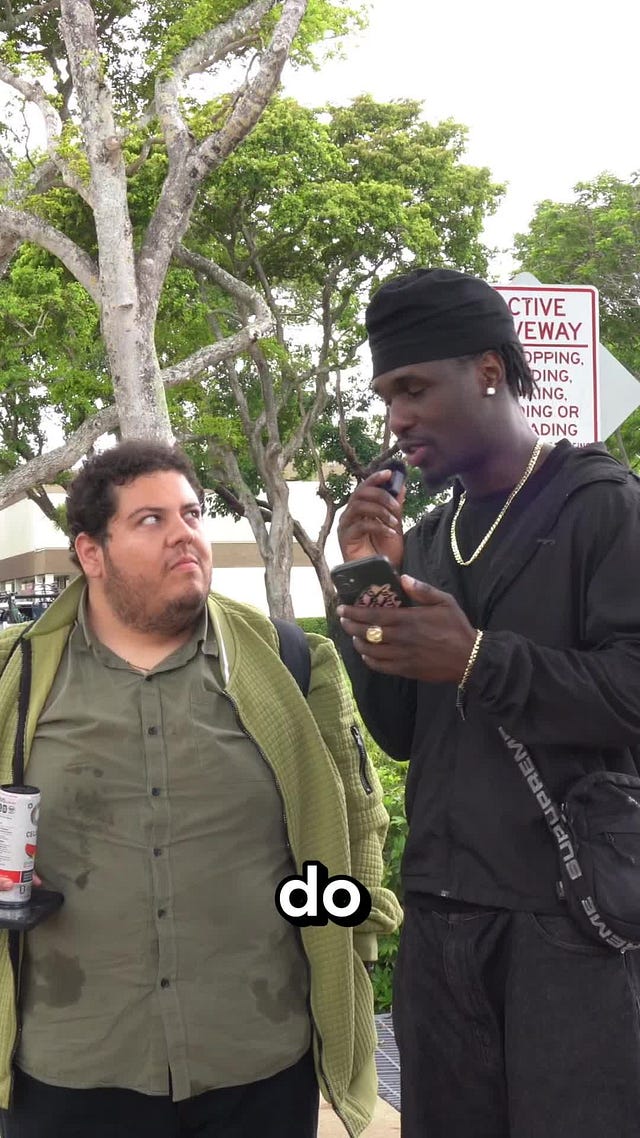
You can watch the guessing in real time. A creator on TikTok walks up to strangers with a photo of a man and asks them to call it, gay or straight. Then he shows the next stranger a photo of the man who just guessed. Nine times out of 10, whatever the truth is, the answer comes back gay.
 Tiktok failed to load.
Enable 3rd party cookies or use another browser
Gay men are a small slice of the population, so even the signs people trust — the bag, the voice, the walk — will belong to more straight men than gay ones. That does not mean the signs are fake. It means they are bad evidence.
William Cox, a psychologist at the University of Wisconsin, calls gaydar a myth, stereotyping dressed up as perception. The clothes that got us called slurs in 2004 are a trend. Straight men carry the bags we were mocked for, use the words, and wear the cuts. A man carrying a purse today is inspired by the actor Jacob Elordi, not giving himself away. The signs did not disappear. They got common, which is almost the same thing.
Even the nail shop showed me that. There was a time when a man in that chair would have read as suspect, soft, out of place in a woman’s room. Now the women in it want to marry me off. The room stopped meaning what it used to mean.

I am not only thinking about the women in that nail shop. I am thinking about the women, especially Black women, who were once told that spotting men like me was their job.
You would expect them to be the best in the world at this, because the cost of missing it lands on them. A husband hiding his desire for men, or running a second life outside the marriage, is taking something she never agreed to give. It is her marriage, her health, her sense of what was real. If anyone had reason to grow a hair-trigger radar, it is the person who could be deceived by not having one.
The culture knew this once and made a circus of it. Twenty years ago “the down low” was everywhere. In 2004, J.L. King sat across from Oprah describing an army of secretly gay Black men infecting their wives, and the panic ran from her stage to a New York Times Magazine cover. The instruction handed to Black women was vigilance. Learn the signs. Study your husband. Spotting gay or bisexual men became a wife’s job, with her life named as the stakes.
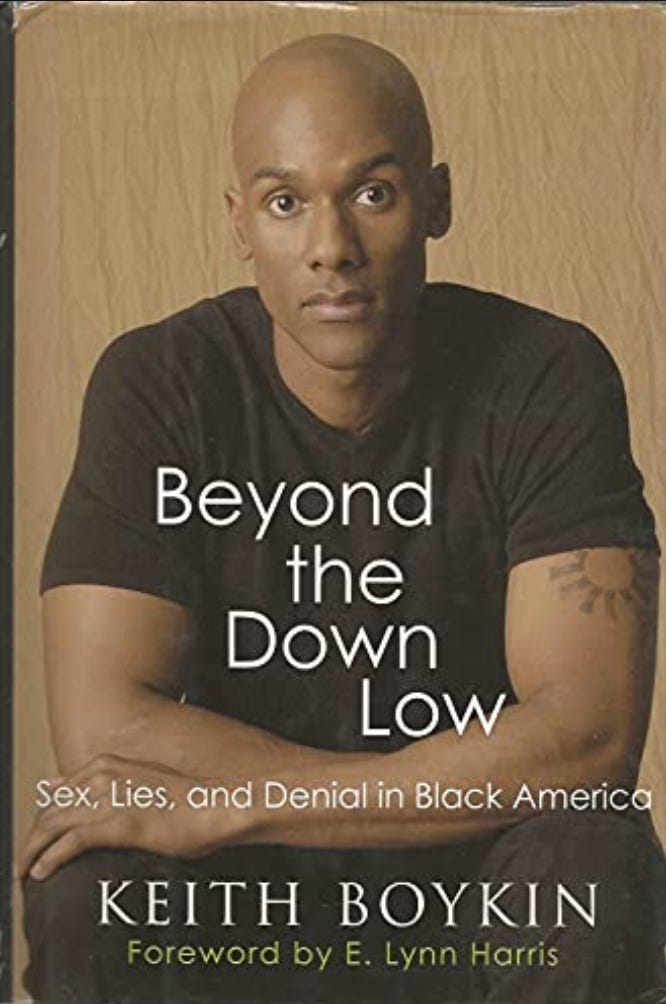
Keith Boykin wrote a whole book taking it apart because the evidence never supported the scare. There was no proof that men on the down low were any more likely to carry HIV than anyone else, and the panic mostly served to brand Black men as liars and carriers. The evidence was thin. The damage was not.
The panic wasn’t really about secrecy, but about labeling gay Black men as something to detect, which catches me whether I hide or not. What it left alone was the thing that built the lie: the pressure to marry a woman, to act the part, to keep the truth somewhere no one could find it. The same default that lets a man pass is the one that keeps a woman from seeing past him. Black women were handed a job they could not win and then blamed for losing it.
None of this is on my mind in the chair. My hands are nearly dry. The woman offering me a wife is harmless. This time, nothing is riding on the mistake but her matchmaking record. The offer stays on the table. I leave it there. She finishes the last nail and holds it up to the light, pleased with her work. ⁂

