

The Country Wants My Hope. No, Ma’am
America asked for my hopes and dreams ahead of its 250th birthday. The most honest answer I have starts with the passport that lets me leave.

The invitation came first.
America turns 250 this year, and the official campaign wants a story from me. It is called America’s Invitation. The ask is simple enough. Share your story. Reflect on the country’s past, present and future. Tell America your hopes and dreams. No story is too small.
Hopes and dreams? With everything going on? I read it twice to make sure it wasn’t a set up.
The invitation didn’t make me angry at first. It made me laugh. The country was asking for my hope as if hope were a civic resource I had been saving for the occasion.
The first national scandal I remember clearly was Monica Lewinsky. In high school, the adult world was suddenly everywhere and ugly in ways I never imagined. Then 9/11, right as I was old enough to understand it. The wars. The financial crash. The shootings, one after another. None of that made me cynical. It made me pay attention.
So when the country asks for my hopes and dreams, I want to know what kind of party this is, and why the invitation to gather around the table is arriving now. After racism and oppression spanning many generations of Blacks in America, and many opportunities for reparations have been dismissed, this invitation feels like an afterthought.
The official party is America250, the bipartisan commission Congress set in motion years ago to mark the semiquincentennial. Its language is soft and expansive: Service, reflection, storytelling and a country narrating itself into the next century. Then there is another party, the Trump-backed Freedom 250 celebration, louder and harder to separate from the politics of the man presiding over it. One country, two stages, one birthday, and a lot of people staring at the envelope, trying to decide whether it was ever really addressed to them. Most of the musicians booked for the White House concert backed out over how political the event became. A birthday party is supposed to gather people.
An invitation assumes you want to be in the room.
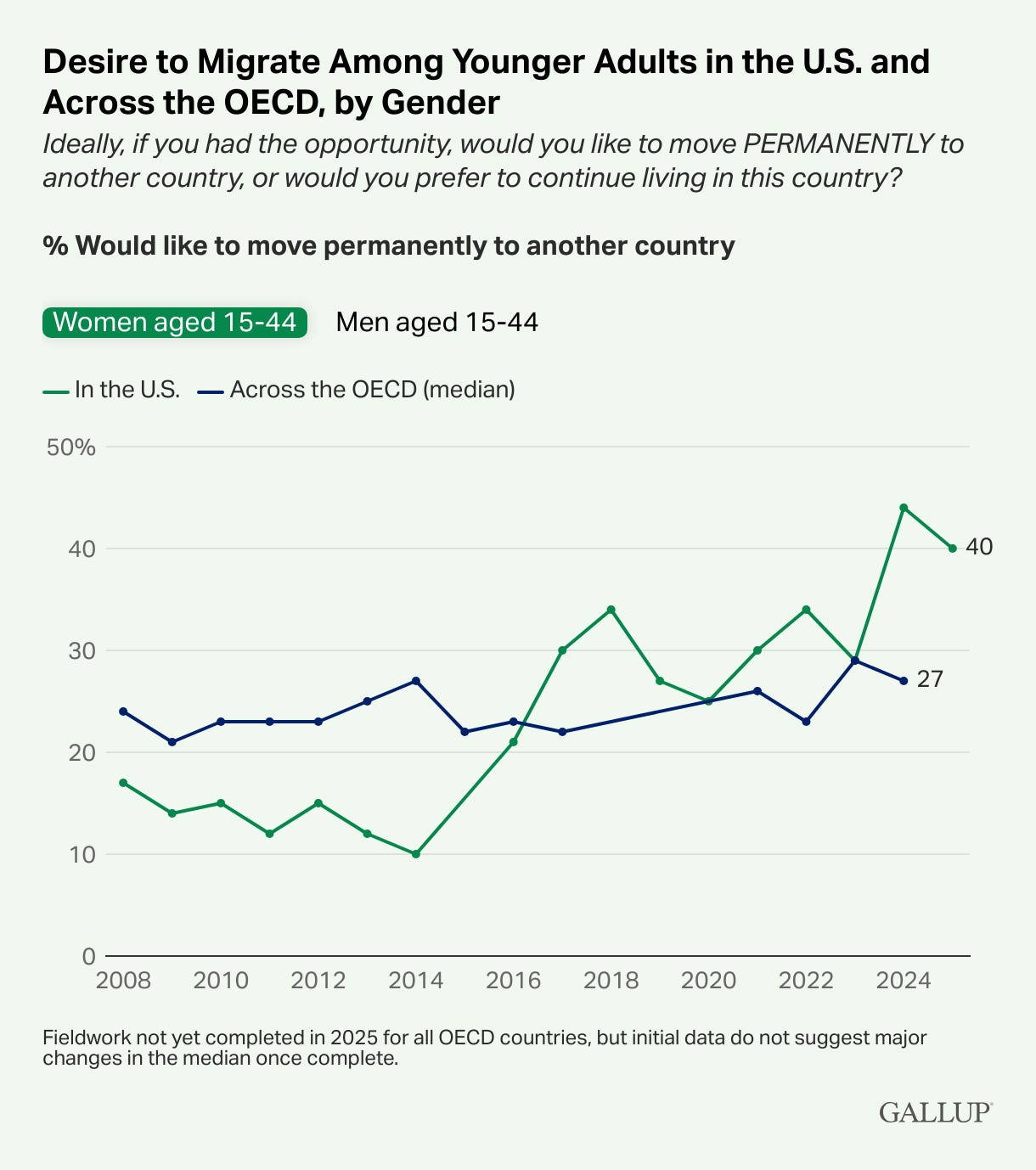
But, for the second year in a row, about one in five Americans said they would like to move permanently to another country if they could. Among women ages 15 to 44, the number was 40%. Among men in the same age group, 19%. Gallup reported there has not been a gender gap that wide recorded in any country surveyed since it began in 2007.
The country wants hopes and dreams. For a lot of people, the most honest dream is to leave.

In June, Trump sat down with NBC’s Kristen Welker in a Wisconsin barn.
It was raining. She pressed him on election lies, January 6 and the people who attacked police officers at the Capitol. He did not like the questions. He called the press crooked. He said the country could never be great with a dishonest press. Then he ended it.
“I’ve had enough. Thank you, darling.”
He pulled off his microphone and walked away. On the way out, he stepped on it.
Welker is the first Black journalist to moderate Meet the Press in the program’s history. This wasn’t the first time this president has gone after a Black woman reporter by name. I’m a Black gay journalist, so I caught all the encoded slights. The darling. The lecture about honesty from the man (convicted of 34 felonies) doing the most to make honest reporting harder. I’m not going to sit in Welker’s chair and tell you what that hour felt like for her. But the moment said everything. Nothing in that exchange pointed to hopes for the country to be better. This party host was not extending an invitation. It was a man telling the country he was done being asked anything at all or owing anyone an answer. He declined accountability.
That is the problem with being asked for a story by a country that keeps punishing the people who tell the truth about it.

Eleven years ago, two weeks before I turned 33, I got the right to marry. I didn’t know what to think at first. I had never planned a wedding in my head. I never picked a place or what I would wear because there was no wedding for me. The only version of marriage available to me was lesser, like a civil arrangement. Now I was able to picture the whole day. But since then I’ve watched the country pivot away from civil rights. Roe, gone. Affirmative action, gone. In April the U.S. Supreme Court gutted Section 2 of the Voting Rights Act, the part that let voters of color challenge maps drawn to erase them, a right my grandparents’ generation was beaten for. Justice Kagan wrote that the ruling renders the law’s protection “all but a dead letter.” Same-sex marriage still stands, but the lesson of the last decade is that standing is not the same as safe.
My invitation arrived in a house where the locks had been changed.

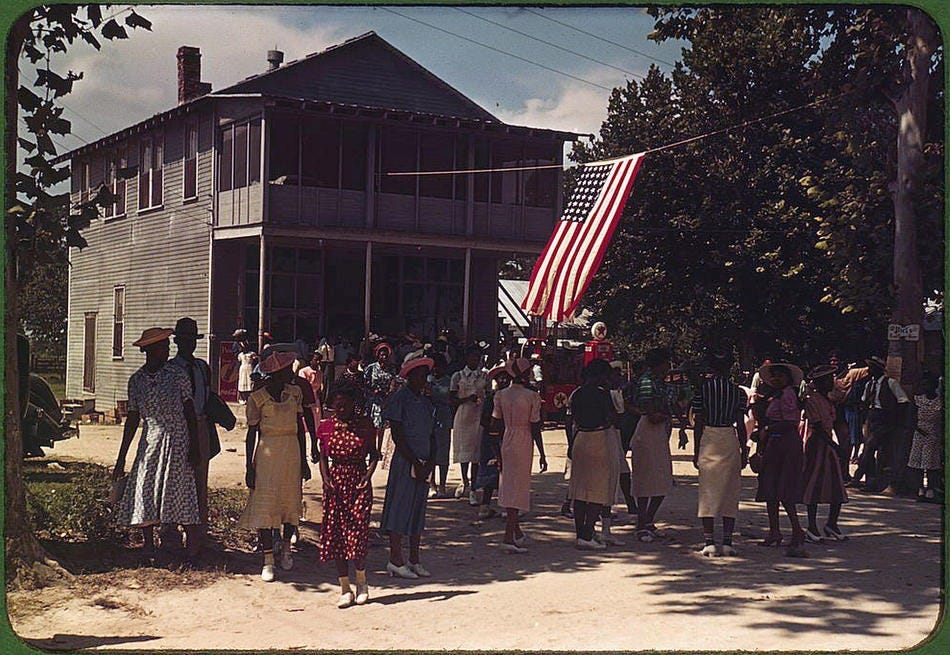
For most of these 250 years, most people here were not asked what they hoped for. Enslaved people did not need a national storytelling campaign to know what the country hoped for them. Indigenous nations did not need a commemorative logo to understand what expansion meant. The Chinese laborers who laid track across the West, the Mexican families whose border moved, the Black voters who had to bleed to vote only to watch the courts thin their long-sought right. None of these groups were excluded by chance. Their labor, land, votes, languages, bodies and grief helped build the country now asking everyone to celebrate it.
You can get an invitation and decline. In November 2024, a lot of us made the same decision without holding a meeting. We sat down. We looked at who actually shows up for us. The list came up short, and we decided to expend our energy on ourselves. It’s the best thing I’ve done in years. Some people call that giving up. I like to think of it as us finally reading the country’s Terms and Conditions.
The terms were our attention. Our reaction. Our outrage. Our presence. The token in the room so someone can say the room was full. Declining to respond to the invitation is unexpected.
And then there are the people who skip the official party and throw their own. They always have. The block the bank wrote off threw a cookout anyway. The targeted neighborhoods that turned their spaces into sanctuaries. The queer bars that became churches because there was nowhere else left to live your truth. The America that celebrates itself in the margins, on its own terms and without waiting to be asked. That is the party I trust.
The country turns 250 on the Fourth. I turn 44 five days later, an ocean away. I wanted to take this trip at 40 and couldn’t, so I waited for a birthday that felt like it mattered. There will be espresso. There will be pasta. There will be a lot of standing in front of things that were old before my country was an idea, feeling small in the good way. I’m throwing myself a party.
I can do this because I’m American. The passport that comes with excess baggage also allows me to walk into most of Europe and stay 90 days without asking anyone. I’ve stood in countries where the people I met could not dream of that. The same trip for them would mean visas, interviews, bank statements, savings, and a likely no. I have met people for whom borders are walls. My blue booklet carries the wars and wealth, the military bases and currency, along with assumptions people make about me before I open my mouth. But it also carries me through the door. I have the freedom to leave because of the country I’m leaving.
I often think about Whitney Houston’s performance at the Super Bowl in 1991, singing the national anthem while the country was at war. I get chills every time I watch it. It’s the most patriotic I ever feel, and it’s a feeling I can’t reach anymore except through her, on that one night 35 years ago. Now we have a man stepping on his microphone in a barn.

In the last decade, the country rolled back rights I watched it grant. In the same decade, I found some peace, left America, came back and left again. I pursued creative passions. I aged. We both have. But I trust what I became more than what the country keeps asking me to believe.
I do have hopes and dreams. They’re just not the country’s to collect anymore. It doesn’t get to define them, perform them, or count my showing up as attendance. My hope does not belong to the anniversary campaign. It does not belong to a commission. It does not belong to the president or a political party.
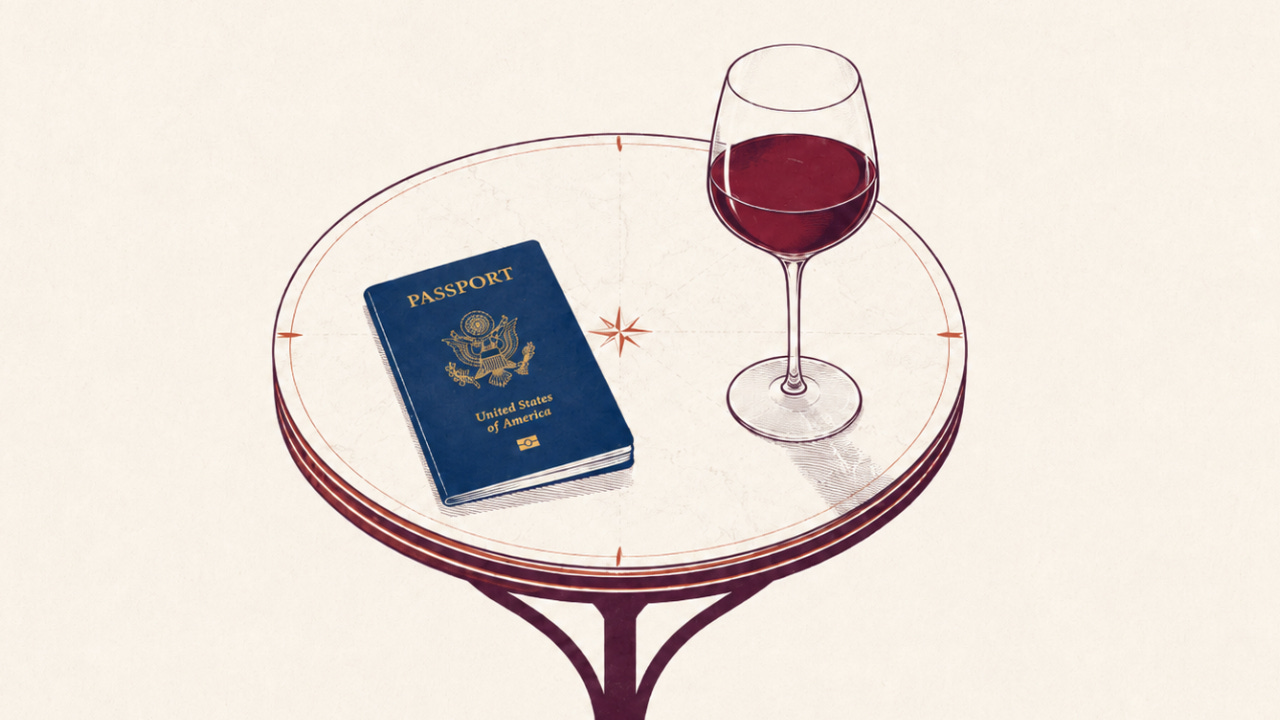
No story is too small, the invitation said. Fine. Here’s mine. On my birthday, in another country, I will sit at a table with a glass of wine, my passport in a drawer. I’ve decided hope is worth keeping. Where that hope goes is up to me. ⁂
This essay was edited by Dana Amihere. Co-published with AfroLA.

