

Some People Travel. Their Hierarchy Does Too.
A glare in Bali becomes a reminder that some travelers cross borders without leaving their racial hierarchy behind.

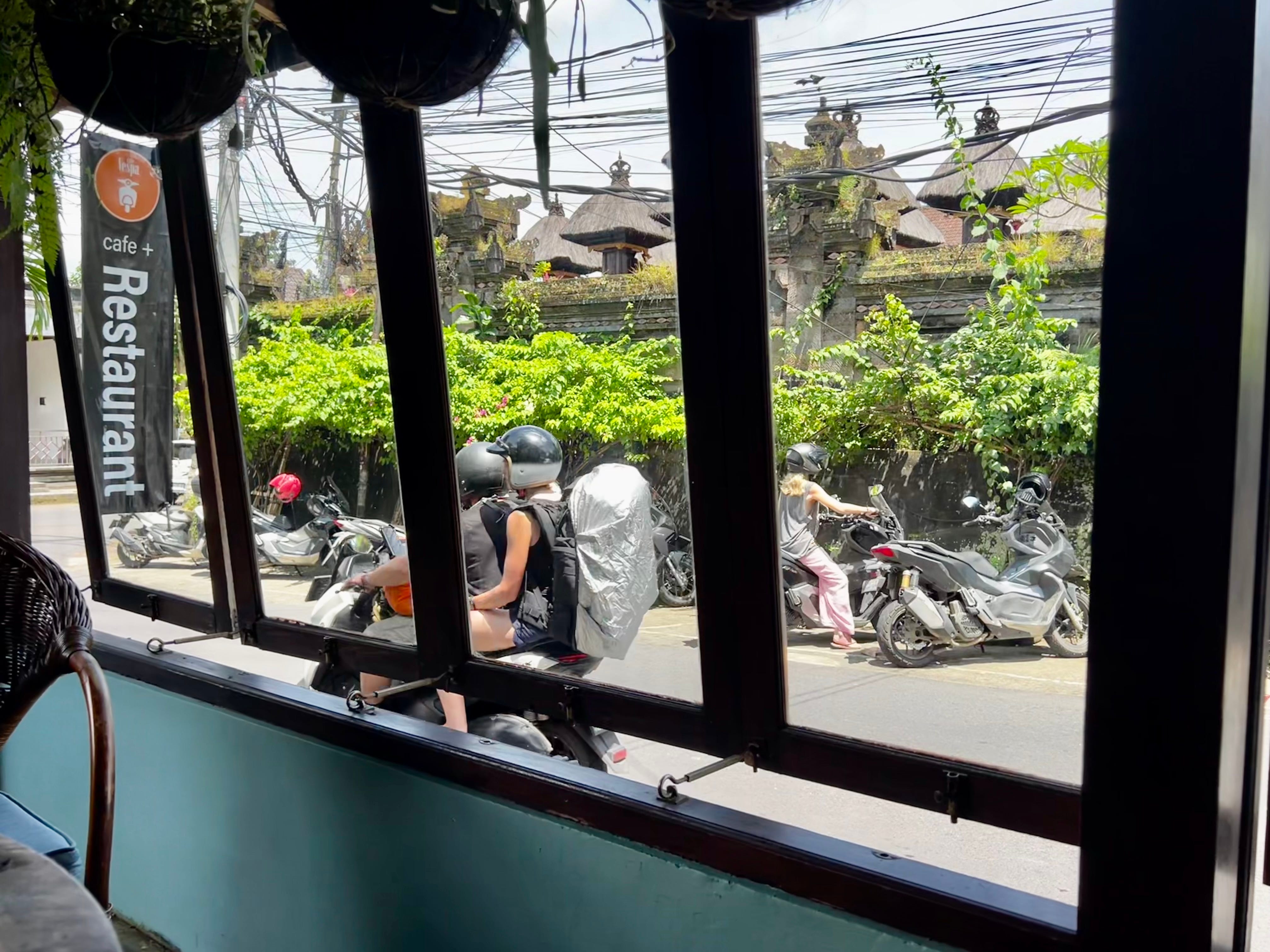
I was sitting by the window waiting for my food, half on my phone, half watching the street.
Next door, a white couple came out of the restaurant and climbed onto a motorbike. I happened to look up at the same moment the woman looked over at me. The expression on her face was immediate and unmistakable: a glare sharp enough that it made me laugh out loud.
It wasn’t fear exactly. Not curiosity either. It was something closer to offense. The kind of look people give when they feel their space has been intruded upon.
And I remember thinking, almost instinctively: No — what are you doing here?
Not because I belonged there more than she did. I didn’t. We were both visitors in Bali. That was the point.
I’ve seen versions of that look in Vietnam and Thailand. It’s not the hostility that bothers me. It’s the assumption underneath it. Some white travelers arrive in other people’s countries without leaving their racial hierarchy behind. They move through a place as if they are still the reference point.
There is a special kind of delusion in being a guest and still imagining yourself the default. Travel is supposed to unsettle that instinct.
Leaving your own country should interrupt the belief that the world is organized around you. But that interruption doesn’t always happen. Some people cross borders without giving up their old assumptions about who looks suspicious, who seems out of place, or who gets to move through a space without explanation.

Tourism has a history of making that posture look normal. Scholars have argued that modern tourism didn’t develop apart from imperial power — it developed alongside it. Old ideas of superiority still shape how people move through other people’s countries today.
Indonesia has its own version of that history. Research on colonial tourism in the Dutch East Indies shows that travel was tied to racial hierarchy from the start, with places marketed for European visitors and local people cast as part of the backdrop rather than the center of the story.
Bali’s present-day tourism economy makes that tension sharper. In 2024, the island received 6.33 million international visitors, according to TIME, which reported on the strain overtourism has placed on daily life, infrastructure, and the patience of locals. None of that means every tense glance carries grand historical meaning. But it does mean these encounters do not happen in a vacuum.

What made me laugh was how much could fit inside such a small moment. A look lasting maybe two seconds, and inside it an entire social order. Not just prejudice, but orientation. A way of seeing the world that survives the flight, the passport check, the hotel arrival, the scooter rental. A person can travel thousands of miles and still expect the hierarchy they learned at home to hold.
That may be one of the clearest things travel reveals. Not just where people go, but what they bring with them.
Sometimes it’s curiosity.
Sometimes it’s humility.
And sometimes it’s the conviction that distance changes nothing about who gets to feel central.
Some people travel. Their hierarchy does too. ⁂

