Wendell Pierce Is Not Done Yet
The actor has spent 40 years carrying the stories of the dead. His next role may be the one that explains why.

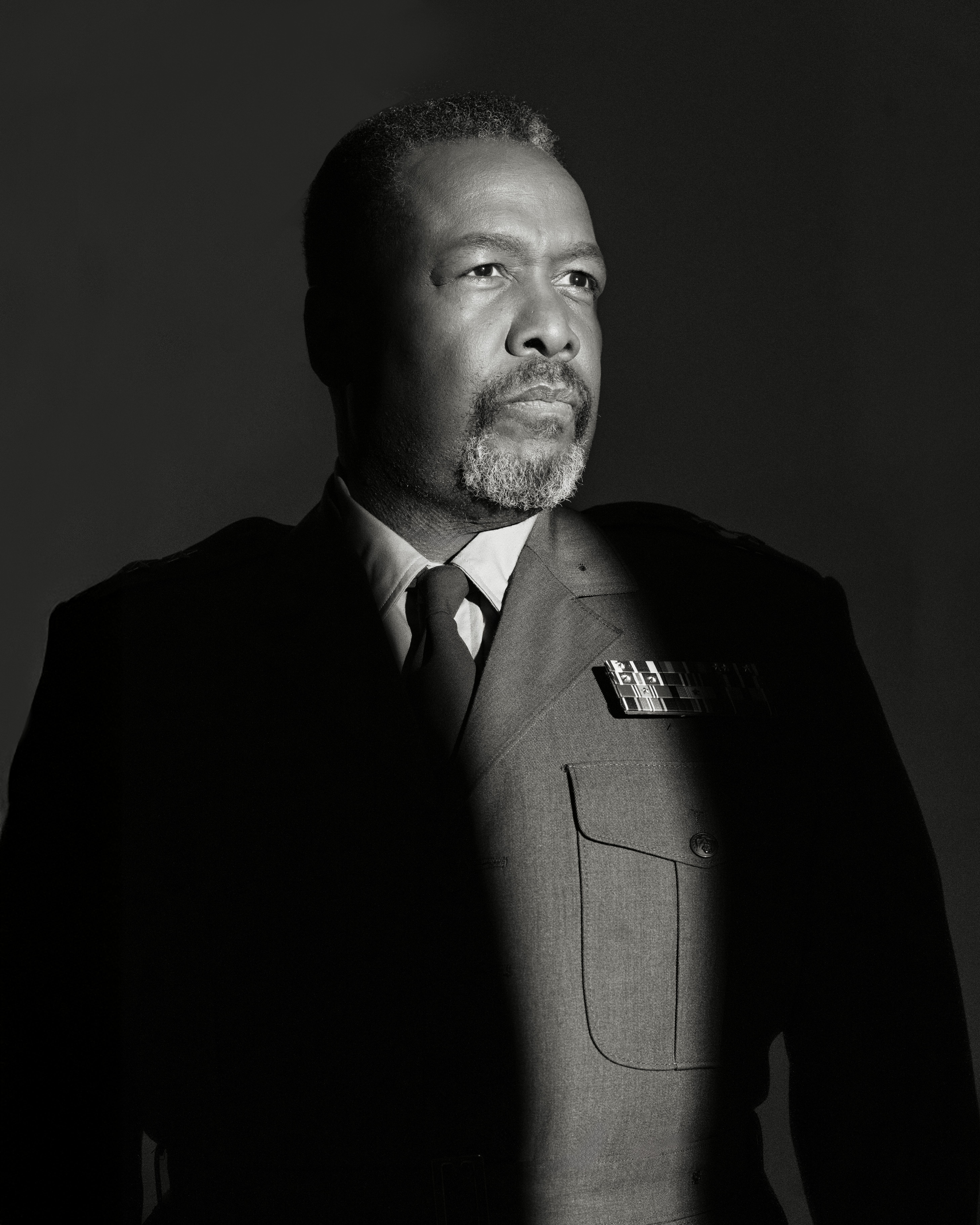
The stage at Harman Hall has a fully trapped floor, the kind of feature made for productions where bodies need to disappear. Othello ends with four of them.
This May, Wendell Pierce will play the lead. He is 63. He has never played the role.
He is Bunk Moreland, the cigar-smoking homicide detective in The Wire. He is Antoine Batiste, the trombonist piecing together a living in post-Katrina New Orleans in Treme. He is Robert Zane in Suits. He is James Greer in Jack Ryan. He is Perry White in Superman. He is Captain Wagner in Elsbeth. He calls himself a journeyman, and he means it as a compliment.
But across 40 years, something more deliberate has been going on in the casting. Pierce keeps landing roles that sit close to Black death, Black witness, and Black cultural memory. He plays the man who studies the body. He carries the music. He survives the killing. He arrives after the loss.
He is a custodian of aftermath.
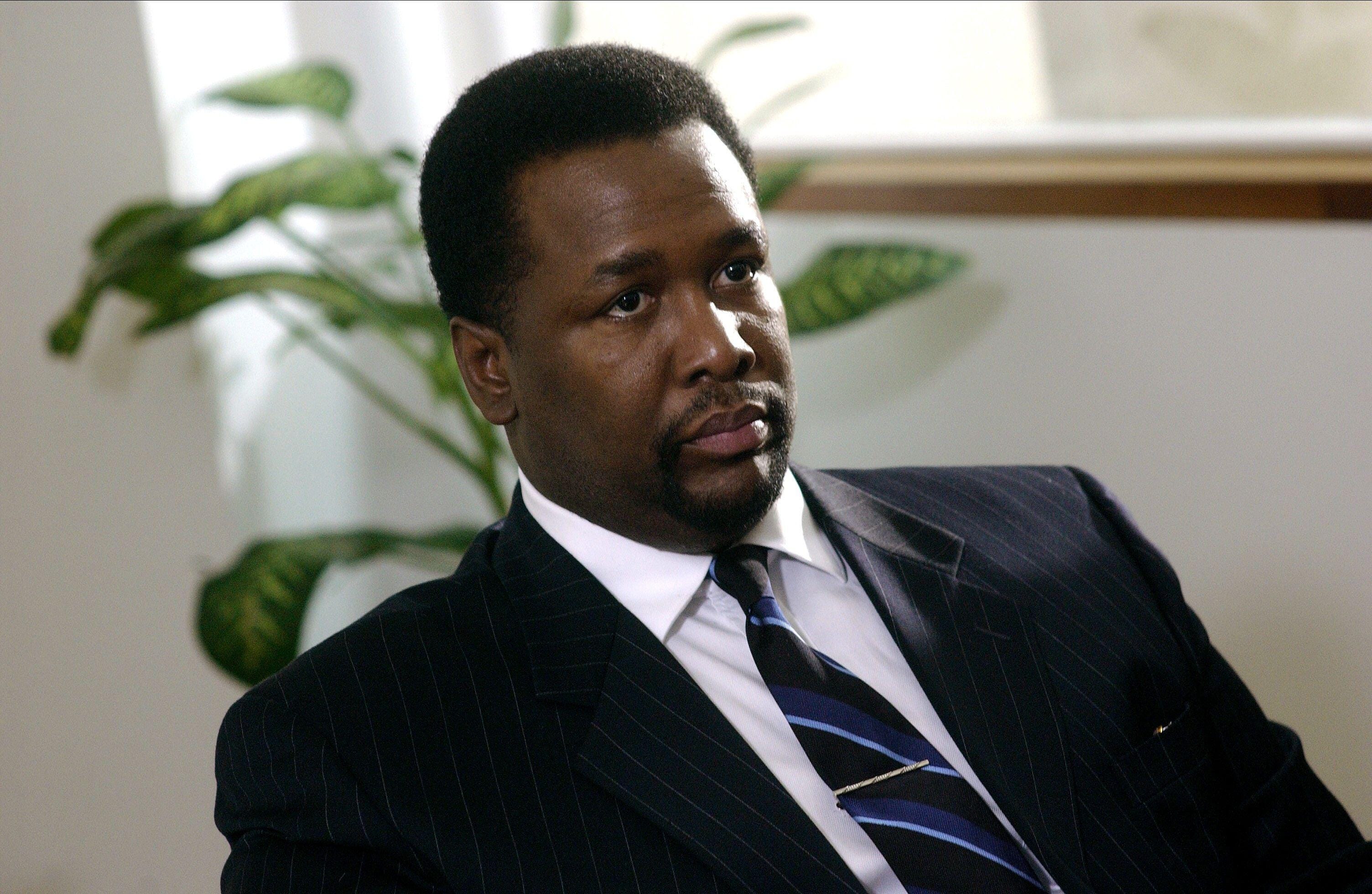
The aftermath shows up in roles that almost go unnoticed.
In Spike Lee’s Malcolm X, Pierce plays Ben Thomas, one of the men who supervises the assassination. It is the kind of role you might overlook in a cast that includes Denzel Washington, Angela Bassett, and Delroy Lindo. But once you see it, the rest of the career reads differently. Pierce enters the orbit of one of the most important murdered figures in Black American history not as a disciple or mourner, but as a man tied to the act itself.
Years later, in Selma, he plays Hosea Williams, Martin Luther King Jr.’s associate. Williams was a World War II veteran beaten nearly to death by a white mob while still in uniform, and he was at the Lorraine Motel the day King was shot, on the floor below the balcony. Pierce’s own father, Amos Pierce Jr., was also a World War II veteran. He fought at Saipan in a segregated unit. When he came home, Pierce has said, his father “was awarded medals and were denied them by a white officer who said, ‘no, not you, not your unit.’”
Then, in Unsolved, Pierce plays the detective assigned to investigate the murders of Tupac Shakur and the Notorious B.I.G., the man tasked with reconstructing what happened after the bullets landed.
The gunman. The witness. The investigator.
He has stood in every position except the one where you fall.

The clearest example of how Pierce works is the fourth episode of The Wire, an episode called “Old Cases.”
Bunk and his partner McNulty are sent to reopen the murder of a young woman named Deirdre Kresson. The detective who handled it the first time did the bare minimum and moved on. Bunk and McNulty walk into her apartment carrying old photos, a tape measure, and a marker.
What follows is one of the most famous scenes in the show. For nearly four minutes, the two of them communicate using almost nothing but variations of the word “fuck.” They lay the photos on the floor where her body was. They eyeball the angle of entry and the angle of exit. McNulty pulls out his own gun and points it at himself, becoming the corpse for a moment. Bunk maps the trajectories on the apartment with his marker. They find a bullet the previous detectives missed.
Pierce has called it one of the best displays of his acting in the series. He is right. The reason it works is that he and Dominic West never let the audience forget what they are doing under the obscenity. They are doing the thing the city did not bother to do. They are reading her body for a story it was already telling.
Bunk drinks. He smokes cigars. He cheats on his wife. He once burned his clothes in a bathtub to destroy the evidence of an affair. He is not noble in the clean way television likes its detectives. But when the politicians massage the numbers and the department stops caring, he keeps working the murder.
He speaks for the dead because the dead cannot fire him for it.
Antoine Batiste, in Treme, carries a different weight. He is a trombonist in post-Katrina New Orleans, hustling for the next gig, teaching music to middle school kids on shoestring budgets, keeping the sound alive through stubbornness. There is a recurring image of him moving through the neighborhood with his trombone case over his shoulder, looking for work, carrying the instrument like a responsibility that does not get lighter just because nobody is paying him enough to hold it.
If Bunk tends to the body, Antoine keeps the song alive.
Pierce played both for the same showrunner, David Simon, about a decade apart. They are doing different kinds of work, but the work rhymes. One refuses to let the dead disappear into statistics. The other refuses to let the music go silent after the storm.

Pierce grew up in Pontchartrain Park, the first Black middle-class suburb in New Orleans, built in the mid-1950s for veterans who came home from the war to a country that did not want them living next door. His parents, Amos and Althea, bought their home there in 1955, the year the wall of segregation in New Orleans first started to crack. Katrina destroyed that house in 2005.
After the storm, Pierce did not go back to Los Angeles and call it a tragedy. He went home. He co-founded the Pontchartrain Park Community Development Corporation. He fought the city for years to buy back foreclosed lots. He helped negotiate the construction of solar geothermal affordable homes. When he realized the commercial districts were not coming back either, he co-founded a grocery chain called Sterling Farms, opening the first store in 2013 in a retired Winn-Dixie location, in a neighborhood the city had designated a food desert.
In the middle of all of that, he starred in Waiting for Godot in the devastated city. Two men waiting for someone who never arrives, performed in a landscape that already looked like the set.
He studied alongside Wynton Marsalis at the New Orleans Center for Creative Arts, then went to Juilliard. In 1981, at 17, he saw the saxophonist Arthur Blythe at the Village Vanguard and took something from it that would stay with him. You could honor the form and still bring your whole self to it. He has called it freedom within form ever since.
Speaking to Esquire in 2019, Pierce described the Black American contribution to Western civilization as the ability to be “malleable, adaptable, improvisational” while still honoring “form, order, restraint.” It also describes the men he plays. They serve institutions that were not built for them and find ways to improvise inside them.
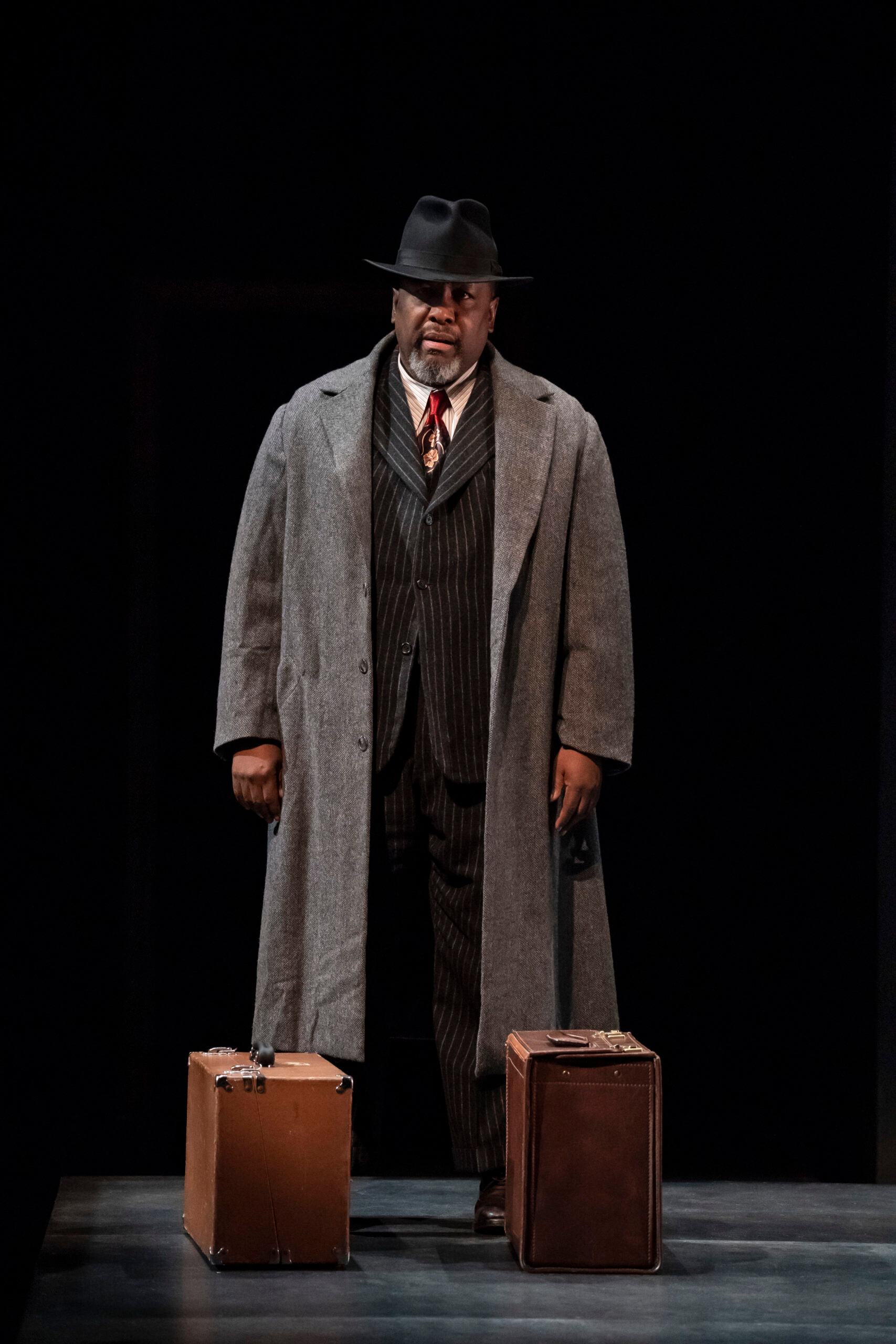
Pierce lived with Willy Loman for more than three years. The Young Vic in London in 2019. The West End at the Piccadilly. Then Broadway, at the Hudson Theatre, opening night October 9, 2022, where he became the first Black actor to play Loman on Broadway.
Three years inside a man whose whole life is the fear of not being seen.
In a 2022 interview with WBUR, Pierce talked through specific moments that read differently with a Black Loman family. The white woman Willy is having an affair with, panicking in a hotel hallway: I hope no one sees me like this. She is, in this version, a white woman saying it to two Black men. The waiter who tells Willy and his sons, You’ll feel more comfortable back here, walking them to a table at the rear of the restaurant. The boss who humiliates Willy in his office. None of these moments need new dialogue to do new work. They just need a Black man in the room.
The critic Ben Brantley reviewed Pierce’s performance for The New York Times after the London run and called it “a propulsive — and compulsively watchable — dance of death.” What had often felt like a plodding walk to the grave in previous productions became something else in Pierce’s hands.
David Simon, speaking to Alexis Soloski for The New York Times the year Pierce opened on Broadway, called him “a student of the human condition.” Soloski heard cadences in his voice that “border on the biblical.”
When critics and journalists try to describe Pierce outside any single role, they reach for scripture, judgment, and consequence.
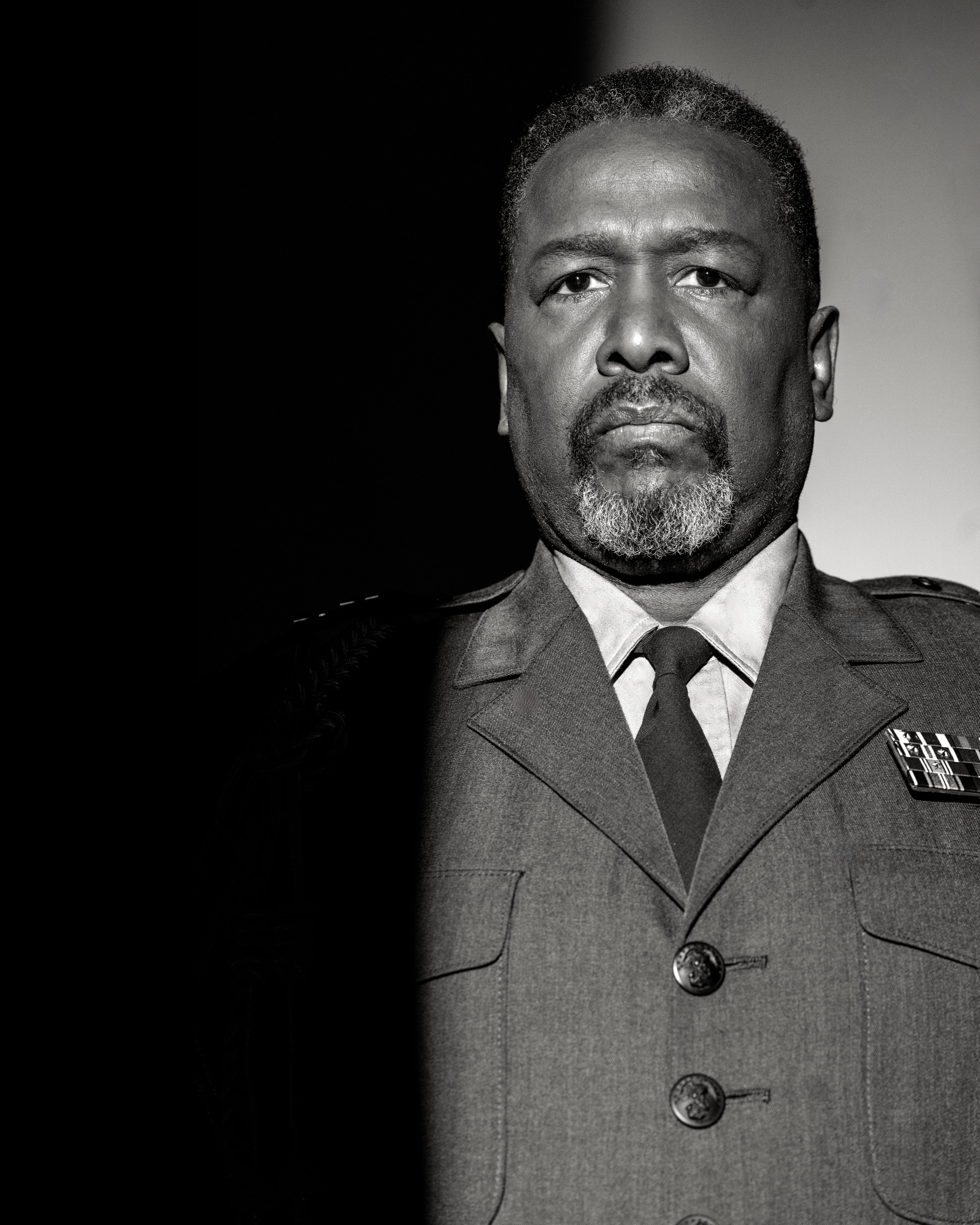
Pierce has stood at the edge of other men’s endings. In Othello, he steps into one.
Othello is a Moor. An outsider inside Venice’s white power structure. He rises to general. He marries. He is destroyed by the colleague he trusts most. Iago does not kill with a weapon. He kills with words. Insinuation. Suggestion. The planted line that does its work from the inside.
The outsider who serves the institution and is destroyed by it is a role Pierce has been playing for years. Bunk inside a corrupt police department. Greer inside the CIA. Zane inside a white-shoe law firm. Wagner inside a precinct under a federal consent decree. Perry White inside a media industry in collapse. In each version, Pierce gives the house everything and knows, somewhere, that the house was not built for him.
Othello loved Venice too much to see what Venice was doing to him.
“One that loved not wisely but too well.”
The line is Othello’s about himself, before he dies. It could describe every custodian Pierce has ever played.
Drew Lichtenberg, the Shakespeare Theatre Company’s artistic producer, has called the production a homecoming, a return to the form where Pierce got his professional start. There are few actors, Lichtenberg said, with the warmth, range, and power “to even imagine tackling the role.”
Lichtenberg is right about the homecoming. He is also right that few actors could imagine the role. But for 40 years, Pierce has carried other men’s deaths. He has always found a way to serve the institution and walk out alive. Othello does not walk out.
It is the most Wendell Pierce role there is. ⁂
Wendell Pierce stars in Othello at Shakespeare Theatre Company’s Harman Hall, Washington, D.C., May 19 – June 28, 2026.